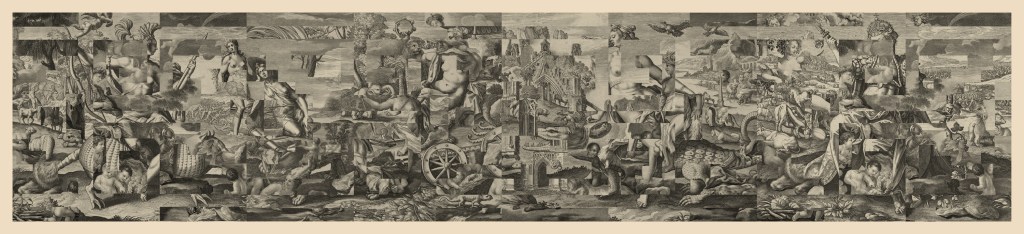
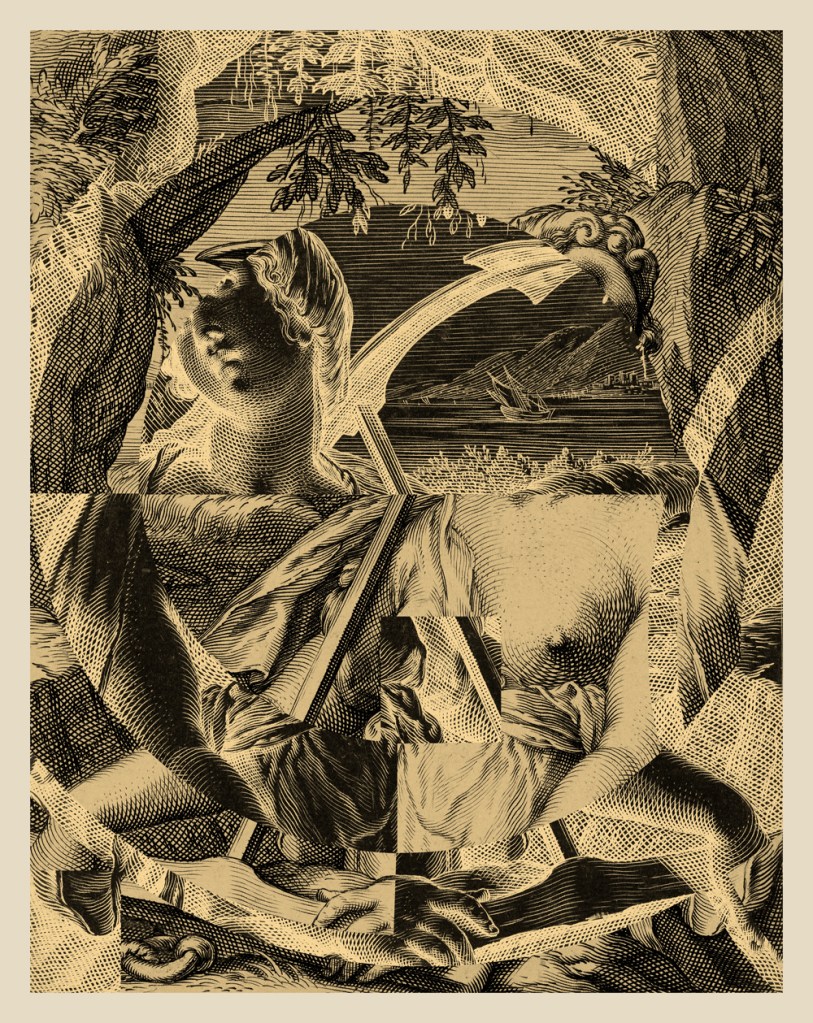
Four Continents, 2026. Collage created from archival images of engravings by Adriaen Collaerty (16th century) and Antonio Salvador Carmona (19th century) from the series Four Continents. Printed on Hahnemühle paper. Wood frame. 244,5X55cm
This project consists of an extensive production of collages developed from the Quechua concept of Llapanchik, which translates as “All of us,” referring to a broad notion of community. This expression also evokes Walt Whitman’s poem Song of Myself (1892) which addresses the tension between the individual and the collective in various passages, until stating emphatically:
“I am large, I contain multitudes.”
This shift from the idea of community to individual identity embraces the contradictions and diversity of human experience, accepting that a person can harbor opposing thoughts, emotions, and roles.
The collages visually address these concepts from a feminist and decolonial perspective. They are created from etchings by European artists, mostly sourced from public domain archives of the Museo Nacional del Prado, The Metropolitan Museum of Art, the Rijksmuseum, and others. Graphic production, particularly during the period coinciding with the conquest of America, represents and disseminates the advance of Reason over magical and religious thought, and is closely linked to the scientific and geographical discoveries that characterize European Modernity between the Renaissance and the Enlightenment. The themes of these works contain a series of elements that symbolize European hegemonic dominance through mythological and allegorical subjects, represented by female figures. The conflict with the worldviews of the Indigenous peoples of the Americas and their corresponding systems of representation is never resolved: the allegories attempt to describe new realities without engaging in dialogue with them.
In Llapanchik, Acha-Kutscher digitally reworks all this visual material, transforming it into graphic motifs inspired by textile designs from pre-Columbian cultures of Peru and Mexico. The result is a mosaic whose meaning shifts as it presents fragmented images, where several worlds coexist and juxtapose each other, generating a multifaceted vision that proposes new visual structures.
Este proyecto consiste en una extensa producción de collages desarrollados a partir del concepto quechua de Llapanchik, que se traduce cómo “Todas/os nosotras/os”, refiriéndose a una noción amplia de comunidad. Esta expresión nos remite también al poema Canto a mí mismo (1892), de Walt Whitman, que aborda la tensión entre el individuo y lo colectivo en diversos pasajes, hasta afirmar con rotundidad:
“Yo soy inmenso… y contengo multitudes ”
Este traslado de la idea de comunidad a la identidad individual abraza las contradicciones y la diversidad de la experiencia humana, aceptando que una persona puede albergar pensamientos, emociones y roles opuestos.
Los collages inciden visualmente en estos conceptos desde una mirada feminista y decolonial. Se crean a partir de grabados de artistas europeos, que proceden en su mayoría, de archivos de dominio público del Museo Nacional del Prado, The Metropolitan Museum of Art, Rijks Museum, entre otros. La producción gráfica sobre todo durante el periodo que coincide con la conquista de América, representa y difunde el avance de la Razón sobre el pensamiento mágico y religioso, y está estrechamente relacionada con los descubrimientos científicos y geográficos que caracterizan la Modernidad europea entre el Renacimiento y la Ilustración. Las temáticas de estas obras contienen una serie de elementos que simbolizan el dominio hegemónico europeo a través de temas mitológicos y alegóricos, representados por figuras femeninas. El conflicto con las cosmovisiones de los pueblos originarios de América y sus correspondientes sistemas de representación no se resuelve nunca: las alegorías intentan describir nuevas realidades sin dialogar con ellas.
En Llapanchik la artista reelabora digitalmente todo este material visual, de manera que sufre un proceso de transformación, adoptando la forma de motivos gráficos inspirados en diseños textiles de culturas precolombinas oriundas del Perú y México. El resultado formal es una suerte de mosaico cuyo significado varía al presentar imágenes fragmentadas, donde coexisten varios mundos que se yuxtaponen, para generar una visión múltiple que propone nuevas estructuras visuales.
Cardinal virtues and their opposites, 2026
4 Collages created from archival images of engravings by Hendrick Goltzius (engraver) and Jacob Matham (artist) from the series The Seven Virtues (1597). Printed on Hahnemühle paper. Wood frame. 54 x 68 cm
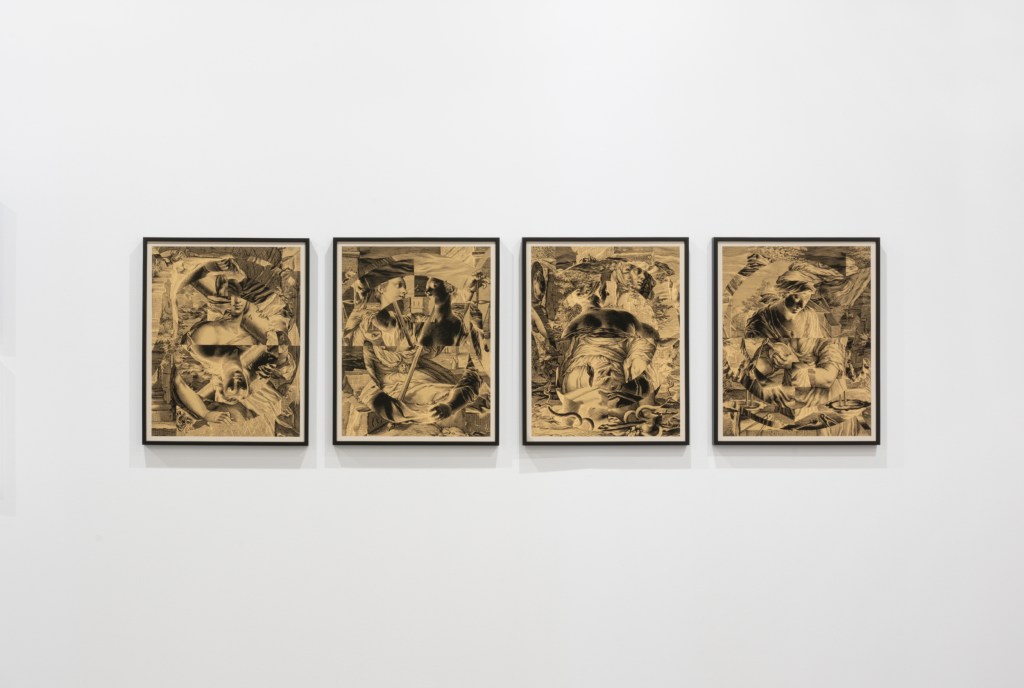
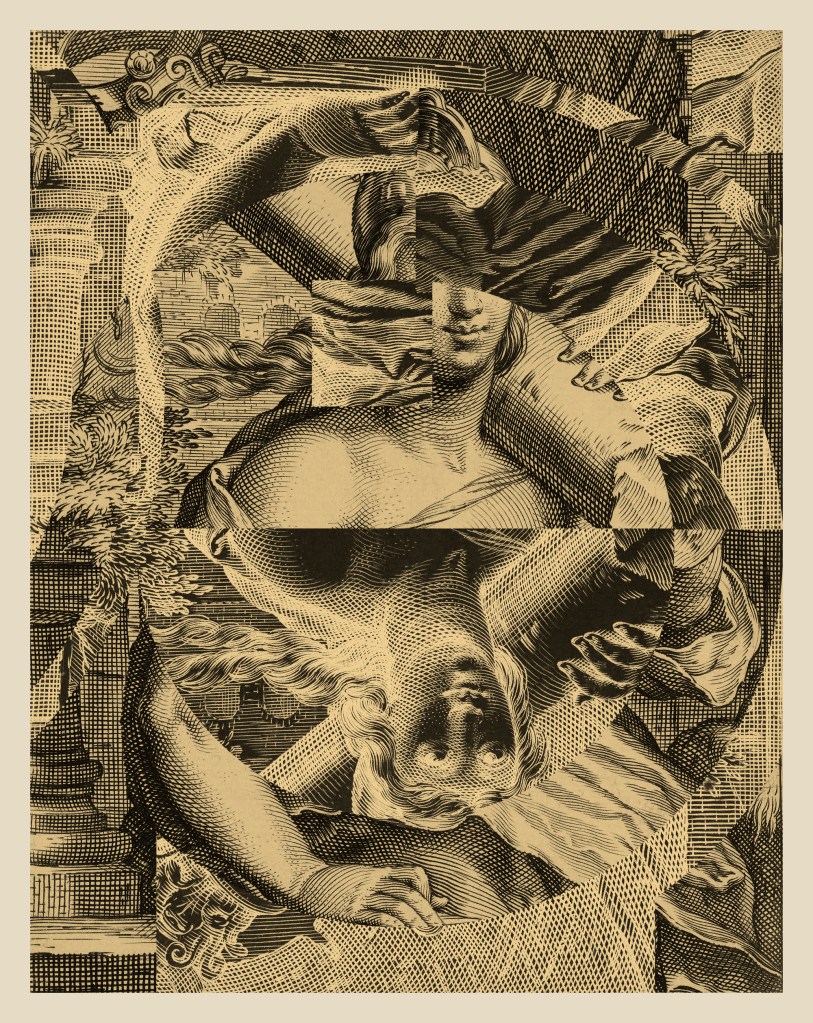
Fortitude and Weakness
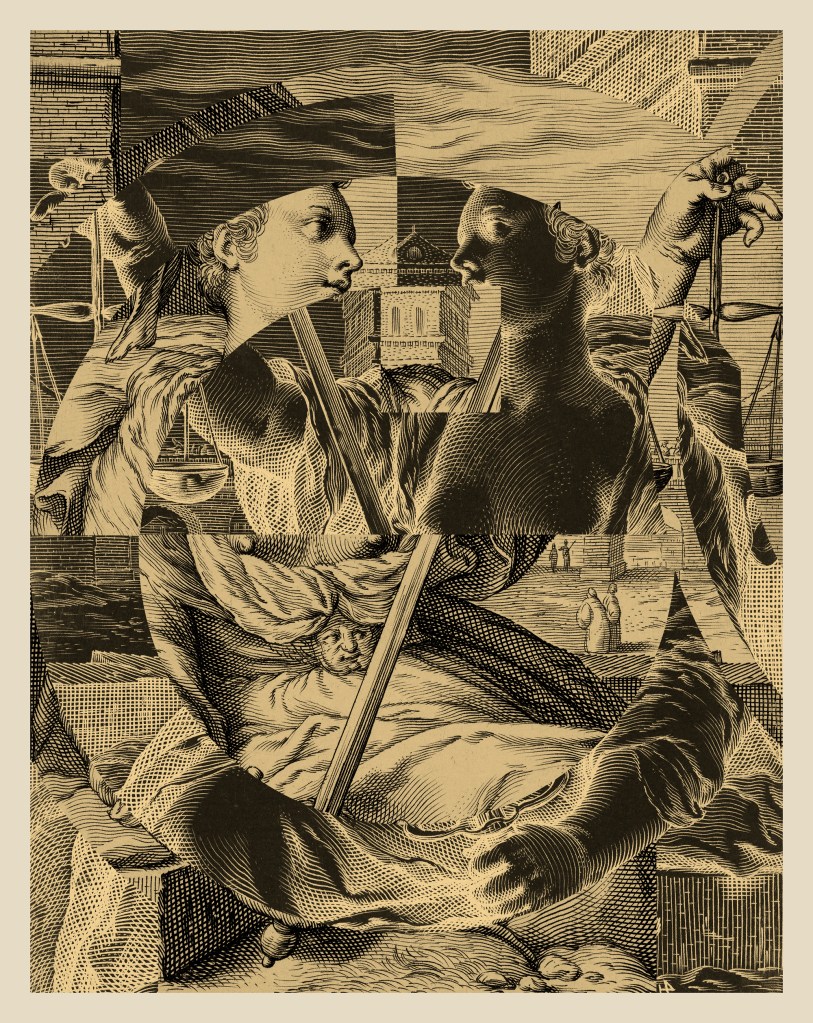
Justice and Impunity
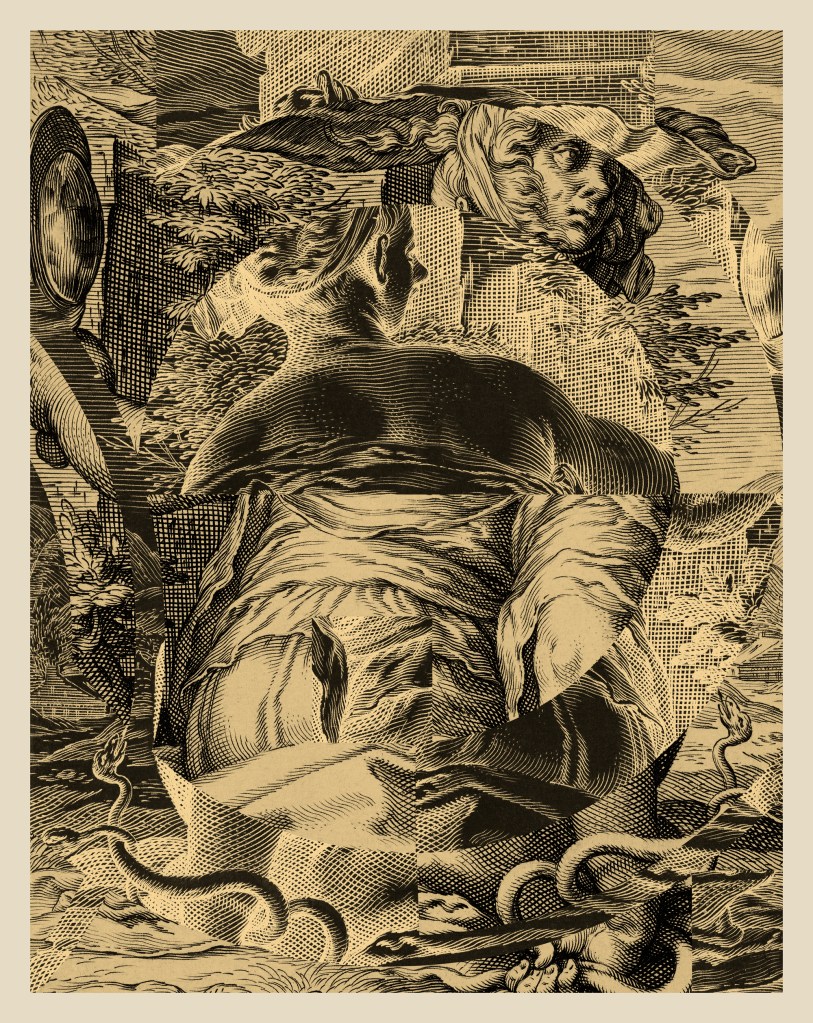
Prudence and Reckless
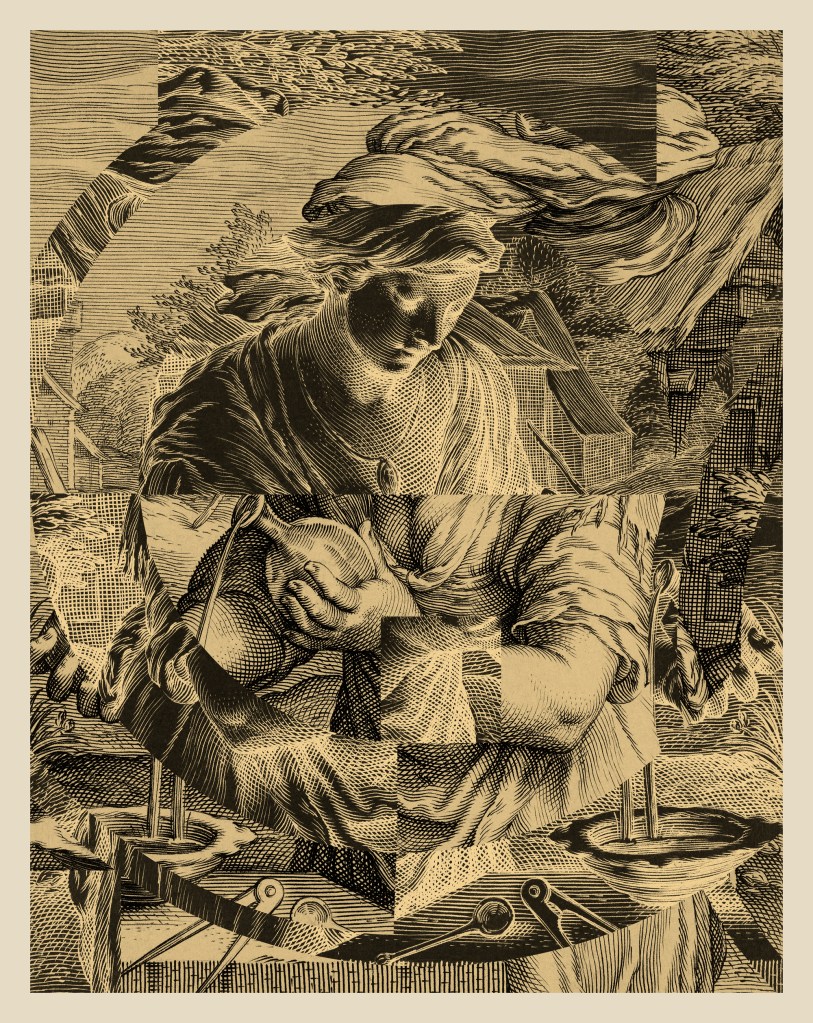
Temperance and Excess
Theological virtues and their opposites, 2026
3 Collages created from archival images of engravings by Hendrick Goltzius (engraver) and Jacob Matham (artist) from the series The Seven Virtues (1597). Printed on Hahnemühle paper. Wood frame. 54 x 68 cm
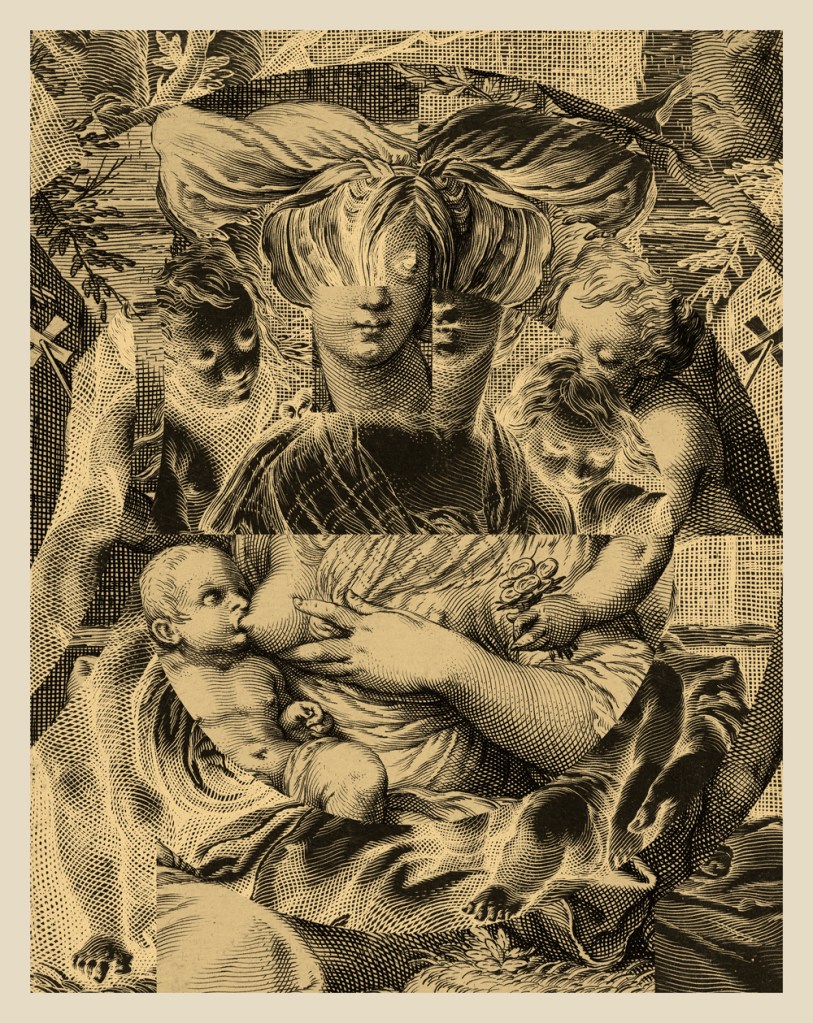
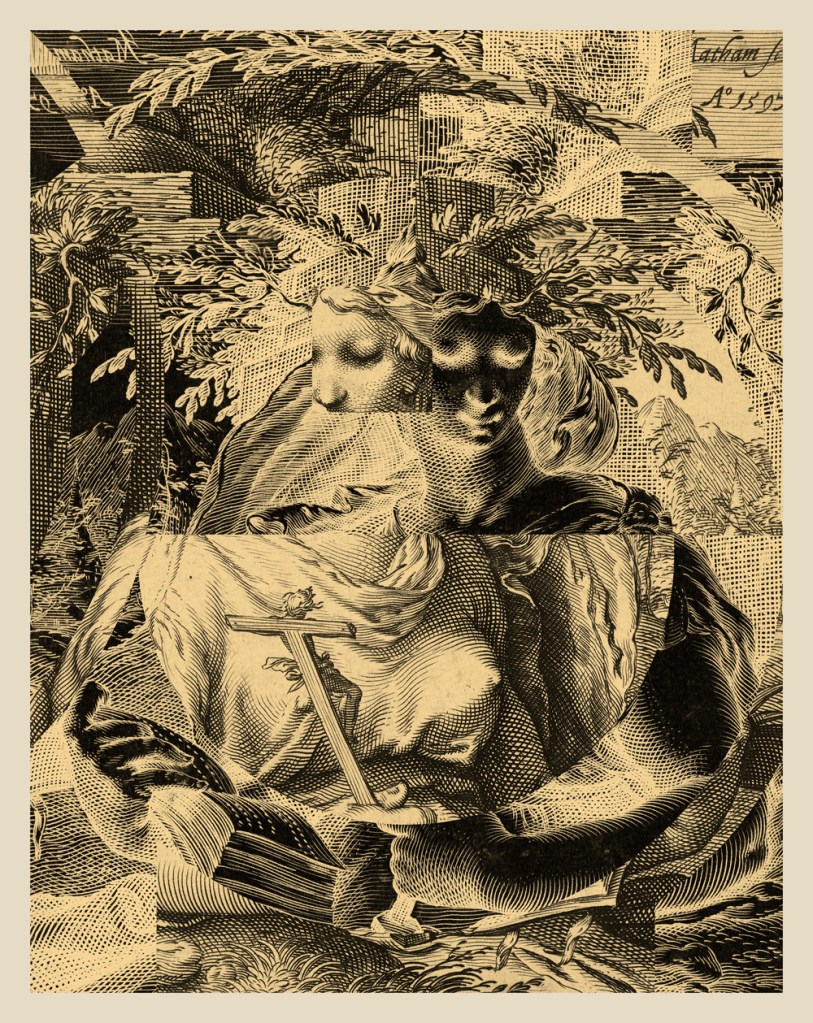
 María María Acha-Kutscher